Shinock family
The Deer KingThe Shinock family is a hereditary household of Servants of the Inner Circle, an institution whose service links family obligation to the concealed political networks of Otawalle. For Makokan, the family’s inherited duty became inseparable from the execution of his brother; refusing that duty at fifteen cost him his place in the family and clan.
Inherited Service
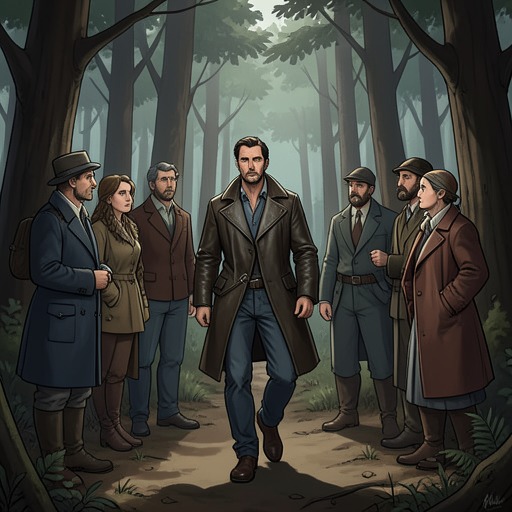
For centuries, the Shinock family had supplied Servants of the Inner Circle. Makokan’s father, its eldest son, accepted the role from youth and was revered within the clan as a nobleman knowledgeable about the outside world. Makokan grew up seeing his older brother and sister as part of this tradition: both had been trained for the work and traveled extensively as secret agents. They visited only once or twice a year, but their affection made them figures Makokan admired and looked forward to seeing.
As the second son, Makokan was trained by his grandfather and uncle, both retired from Inner Circle service. The expected path was clear: at fifteen he would travel to Otawalle’s Sacred Territory, pledge allegiance to the sacred houses, and enter the Inner Circle’s service. The family’s role was not merely a private occupation. The Inner Circle gathered information across Aquafa and continued to influence political affairs after Otawalle relinquished direct rule, making a hereditary household’s service part of a wider network of power.
The Execution and Its Consequences
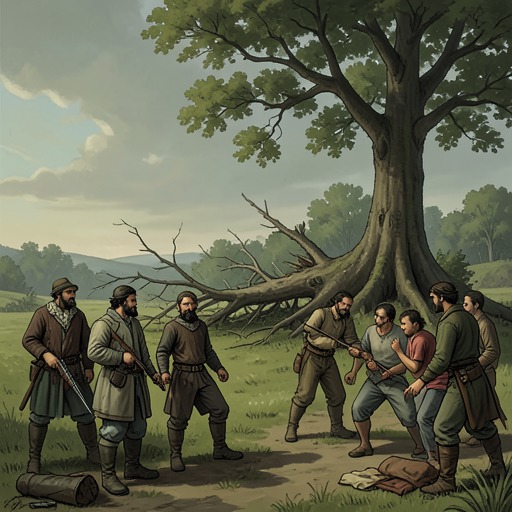
That anticipated future changed when Makokan was thirteen. News arrived that his brother had fallen in love with someone he should not have and had betrayed Otawalle’s sacred houses. To demonstrate the Shinock family’s and clan’s loyalty, his sister killed him herself. Their mother grieved uncontrollably, while their father and grandfather showed no sorrow.
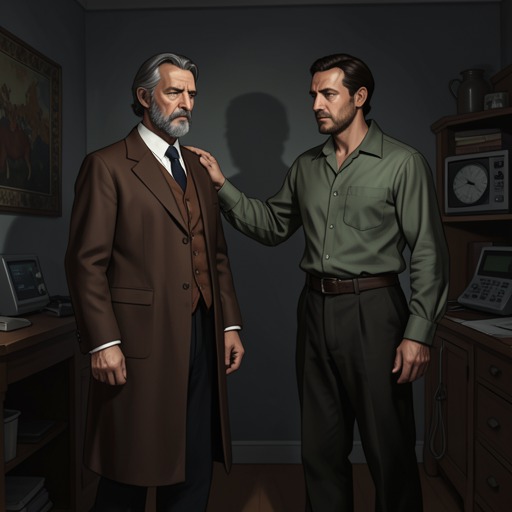
Their father explained the circumstances to Makokan. He could understand that the decision might be considered justified by the Inner Circle’s rules, but the fact that the institution had compelled his sister to execute her brother filled him with rage and distrust. What had previously seemed like a settled inheritance now appeared to him as a dark chain. As he learned more about the Inner Circle’s structure, that knowledge remained stained by what had happened to his family.
Makokan’s Break with the Family
By the spring of his fifteenth year, Makokan refused to take the vows that would have begun his service. He later understood more clearly why the Sacred Territory maintained rules intended to protect itself in a world of competing states, but that broader understanding did not erase his adolescent rejection of the family’s fate. Refusing the vows meant, in effect, refusing the role into which he had been born: the Shinock family disowned him, and the clan expelled him.
Years later, Makokan returned toward his homeland as a servant to a young heir of an Otawalle family, almost fifteen years after leaving in the opposite direction. His father and grandfather had since died, and his uncle’s eldest son had become head of the Shinock family. Makokan had heard that his mother still lived at the family manor with his aunts. The return thus brought him near the household he had left without restoring the place in it that he had forfeited.
Family Duty and Hidden Political Networks
The Shinock family’s history sits within a political order where formal rule and inherited ties coexist. The Inner Circle retained influence after Aquafa’s subjugation by supplying rulers with information, and the Otawalle continued to maintain old connections with groups they had once governed. Makokan’s discovery that those relationships persisted beneath the visible structures of Zolian rule echoes his own family history: service passed down through generations, but experienced by him as both a political network and an intimate source of loss.
That tension gives the family its significance in Makokan’s story. Its tradition offered status, training, and a defined future, while its loyalty to the Inner Circle demanded a choice that shattered his admiration for his siblings and separated him from his kin. The family endures as an institution after Makokan’s departure; the evidence does not show a reconciliation, only his awareness that its household continues under a new head while he approaches it as an outsider.